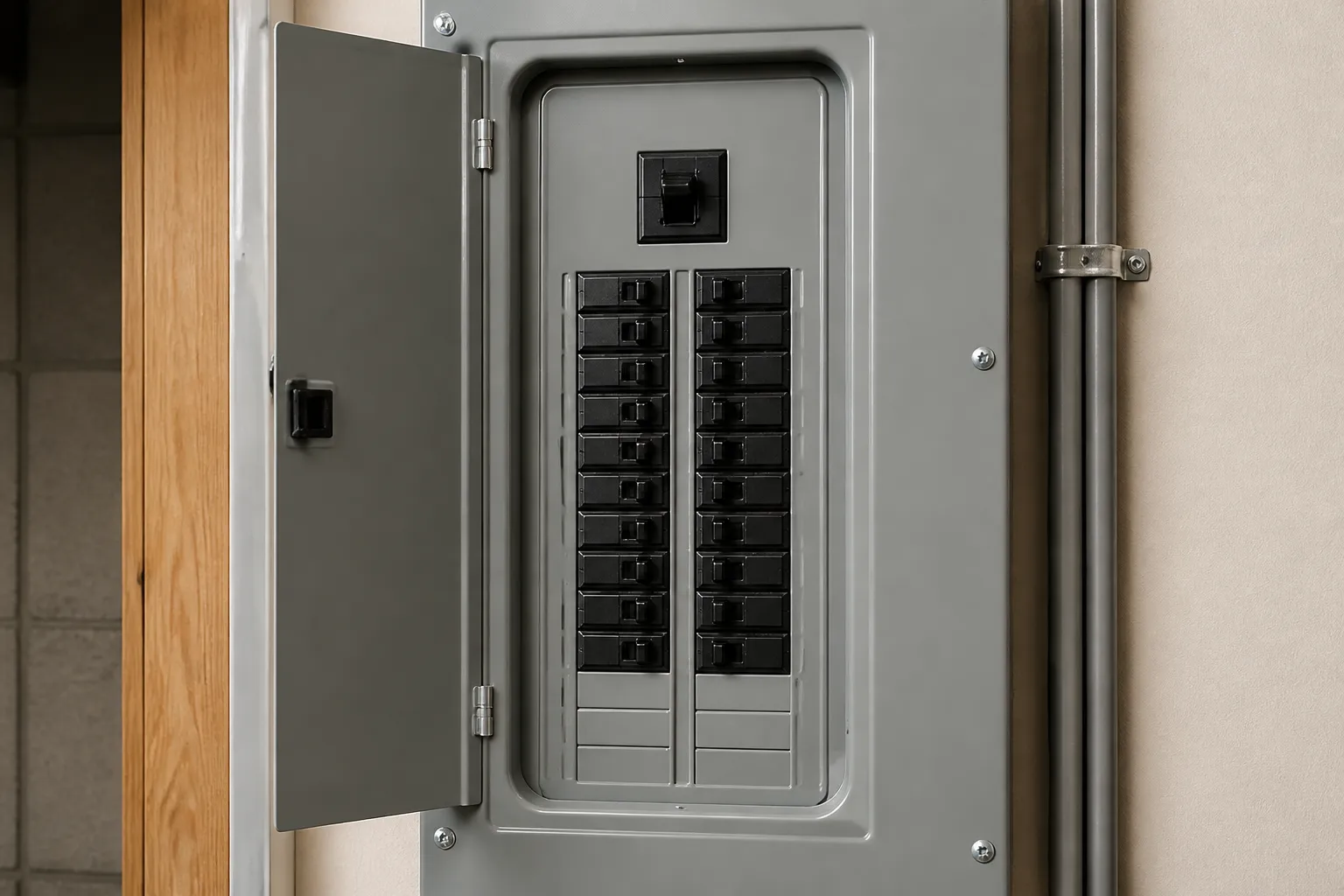
When a breaker keeps tripping, lights start flickering, or a room loses power without warning, the problem is often more than a small nuisance. It can point to an overloaded circuit, a worn breaker, or a panel that needs close attention before the issue grows harder to manage.
If you are dealing with repeated resets or a breaker that will not stay on, HydeWire Electric can inspect the system, trace the cause, and recommend the right repair for your home in Renton, WA. We focus on practical circuit breaker service that supports safer electrical use and steadier power throughout the house.
Circuit breakers are designed to shut power off when a circuit draws more current than it should. That protection matters, but repeated shutdowns usually mean something needs to be corrected instead of ignored. Some homeowners notice the same breaker tripping again and again, while others see a breaker that feels warm, will not reset, or causes a specific outlet or appliance to lose power.
HydeWire Electric helps homeowners sort out the cause instead of treating the breaker itself as the only problem. A breaker may be reacting to a failed appliance, loose wiring, too many connected devices, or a panel that no longer matches the home’s electrical demands. Careful troubleshooting helps reveal whether the solution is a breaker replacement, a circuit repair, or a larger service upgrade.
Breaker service starts with a careful look at the panel, the affected circuit, and the conditions around the outage or trip. We do not guess at the source. Instead, we narrow down what is happening and how it affects the home’s electrical load.
For many homes, the issue sits in one of a few places. A breaker may be worn out from years of use. A circuit may be overloaded by too many appliances on one line. A connection inside the panel may have loosened over time. In some cases, the breaker is doing its job and signaling a deeper problem that needs repair before the same circuit is used heavily again.
Not every tripping breaker needs to be replaced, and not every circuit problem is solved by installing a new one. The right answer depends on the condition of the breaker and the circuit it protects. That is why a direct inspection matters. A good breaker is supposed to trip when needed. A worn breaker, however, may trip too easily, fail to trip when it should, or stop holding after reset.
HydeWire Electric handles circuit breaker service with an eye toward the whole system, not just the visible switch. If the breaker itself is the issue, replacing it may restore normal operation. If the wiring or connected load is the real concern, the breaker may only be a symptom. We help homeowners understand the difference before any work moves forward.
Many breaker problems start when one circuit is asked to carry more than it should. This can happen when high-demand devices share a line, when older wiring was not built for today’s electrical use, or when a home has added appliances without matching electrical improvements. A breaker trip is not random. It is often a clear sign that the circuit needs to be reassessed.
In Renton, WA, homeowners often call when a kitchen, laundry area, garage, or home office starts acting up under regular use. The circuit may have been fine before, but new equipment or changing habits can push it beyond a comfortable limit. We help identify those pressure points so the breaker is not constantly carrying more than the circuit should handle.
Some breaker concerns trace back to the electrical panel itself. If the panel is aging, crowded, or not matched to the home’s current electrical demand, breakers may behave unpredictably. That can show up as frequent trips, difficulty resetting certain circuits, or concerns about how much load the system can reasonably handle.
We provide breaker service alongside electrical panel upgrades, service upgrades, and panel changes when the situation calls for it. That matters because sometimes the breaker is not the true limitation. A panel that is too small, too worn, or too crowded can keep creating the same problem no matter how many times the breaker is reset.
When panel work becomes part of the solution:
Our process is straightforward and focused on clarity. We start by listening to what the homeowner has seen, then move through the circuit and panel with a practical plan. The goal is not just to stop the current trip, but to understand why it happened and whether the same issue is likely to return.
This approach keeps the work focused and efficient while still giving the homeowner a clear picture of what went wrong.
Breaker problems can move from inconvenient to concerning when they involve heat, scorch marks, buzzing, or a smell near the panel. Those signs should never be overlooked. A breaker that trips often may simply be overloaded, but a breaker that runs hot or shows damage can signal a more serious issue inside the panel or on the circuit.
We take those warning signs seriously and handle them with the attention they deserve. Even when the problem turns out to be simple, it is worth checking because breaker service affects the entire electrical system. A small issue left alone can grow into repeated outages, damaged devices, or a circuit that becomes harder to use with confidence.
Usually, that means the circuit is overloaded, the breaker is worn, or something connected to that line is drawing more power than it should.
Yes. A breaker may reset and still be weak, inconsistent, or unable to protect the circuit the way it should.
No. Repeated resets can hide a wiring or load issue that needs attention. It is better to identify the reason for the trip first.
Not always. Some issues are limited to one breaker or one circuit, while others point to a larger panel concern.
Yes. High-demand appliances or several devices on one circuit can push the breaker beyond its intended load.
Yes. We can evaluate breaker problems alongside panel changes or service upgrades when the home needs more than a single repair.
If your breaker keeps tripping, will not stay set, or seems tied to a larger electrical issue, HydeWire Electric can help you sort it out. We provide circuit breaker services for homes throughout Renton, WA, with a focus on safe, steady power and clear communication about the work needed.
Reach out by phone at +14258701719 or email hydewire@yahoo.com to talk through the symptoms and schedule service. We are available every day, and our work is centered on residential electrical systems that need careful attention and practical repair.
Talk With Our Team
Share what is happening at your home, and we will help you plan the next step for repairs, upgrades, new installations, or electrical improvements.